

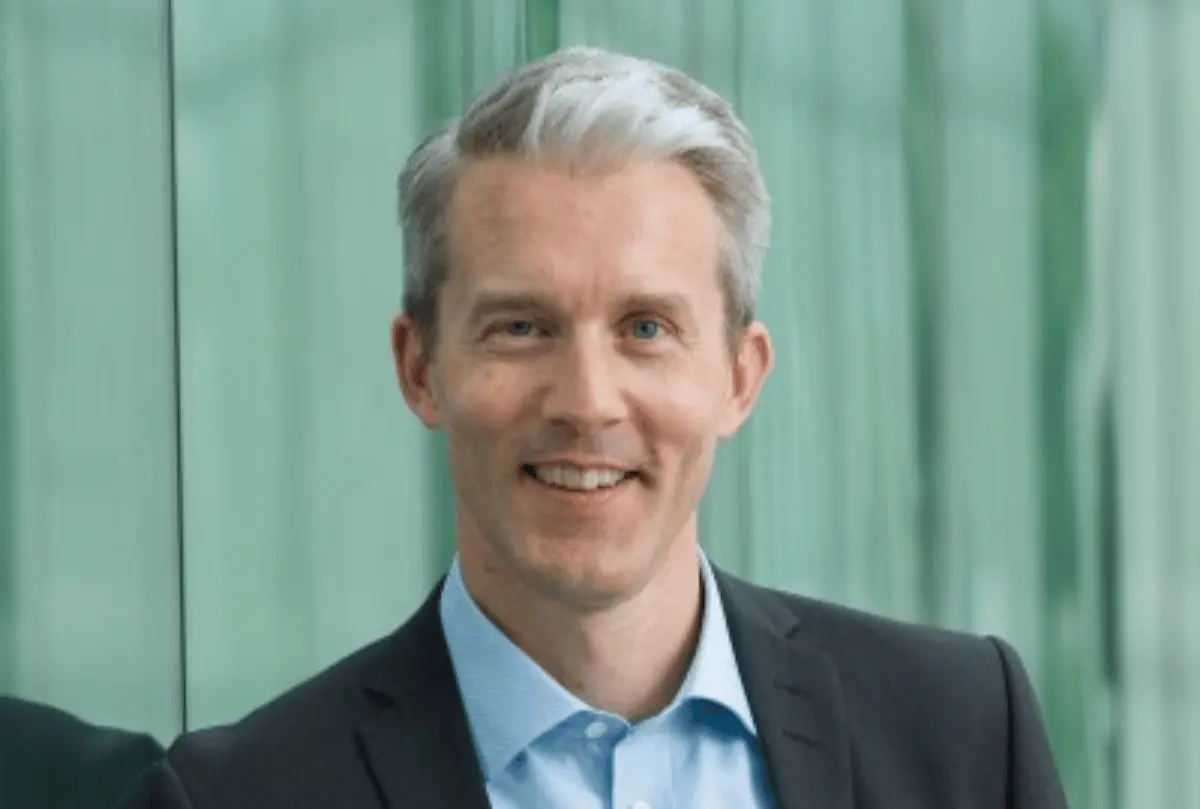
Ericsson’s appointment of Per Narvinger as its next President and CEO looks, at first glance, like a straightforward internal succession. Börje Ekholm is stepping down after almost a decade in the role, and the board has chosen a long-serving company executive to replace him.
But the decision becomes more interesting when viewed through the lens of boardroom judgement. Ericsson could have used the moment to appoint an external CEO and signal a more radical break from the past. Instead, it has chosen someone who has spent almost his entire career inside the business.
Narvinger joined Ericsson in 1997 and has held senior roles across research, product development, software, services, networks and customer-facing leadership. Most recently, he has led Business Area Networks, the heart of Ericsson’s business. Before that, he ran Cloud Software and Services.
That background matters. Ericsson is not a generic technology company looking for a generic transformation leader. It is still, fundamentally, one of the world’s most important network technology businesses. Its future depends on deep knowledge of mobile infrastructure, telecom operators, network software, 5G, eventual 6G and the way AI-driven workloads may change demand for connectivity.
The market context is not easy. The global radio access network market is mature and highly competitive. Dell’Oro Group has described the long-term RAN outlook as low growth, with the market expected to remain broadly stable rather than expand rapidly. Ericsson competes not only with Nokia and Samsung, but also with major Asian vendors such as Huawei and ZTE, in a market increasingly shaped by geopolitics as much as technology.
That is what makes the succession so revealing. Boards tend to look outside when they believe a company needs strategic rupture. They often promote from within when they believe the strategy is broadly right and the next challenge is execution.
In Ericsson’s case, the board appears to be making a clear judgement. Börje Ekholm’s tenure was, in large part, about stabilising and strengthening the business. He took over in 2017 at a difficult moment for Ericsson and leaves behind a company that is more focused, more credible and better positioned in global networks. Reuters reported that Ericsson’s shares have risen strongly this year, suggesting investors have recognised at least some of that progress.
The question for Narvinger is different. If Ekholm’s challenge was to repair Ericsson, Narvinger’s challenge is to find the next phase of growth.
That will not be straightforward. Shareholders will want more than continuity. They will want evidence that Ericsson can grow earnings in a market where telecom operators remain cautious, equipment cycles are uneven and Chinese competition remains formidable. They will also want to see whether Ericsson can turn the language of AI-enabled networks into meaningful commercial opportunity.
This is where Narvinger’s appointment starts to make strategic sense. The opportunity for Ericsson is unlikely to come from abandoning its core identity. It is more likely to come from being better than anyone else at the difficult, technical work of building, selling and monetising advanced connectivity infrastructure.
That requires a CEO who understands the technology, the customer base and the competitive landscape in detail. It also requires someone credible with engineers, telecom operators, investors and governments. In that context, a long-serving networks insider may be less conservative than it first appears.
The board’s decision also says something broader about CEO succession in technology businesses. The most eye-catching appointment is not always the right one. External hires can be powerful when a company needs a reset, but they also carry risk. They need time to understand the organisation, the market and the technical realities of the business.
Ericsson has chosen a different path. The board has opted for continuity, but not simply for its own sake. It has chosen continuity around the part of the company that matters most.
Whether that proves to be the right call will depend on what happens next. If Ericsson can turn its position in networks into stronger growth, better margins and a credible role in AI-era infrastructure, the appointment will look like disciplined succession planning. If growth disappoints, investors may ask whether the board should have looked outside for a more disruptive leader.
For now, the decision is a useful reminder that succession planning is not just about replacing a CEO. It is about deciding what kind of problem the company is really trying to solve.
In Ericsson’s case, the board seems to believe the next problem is execution rather than reinvention.