

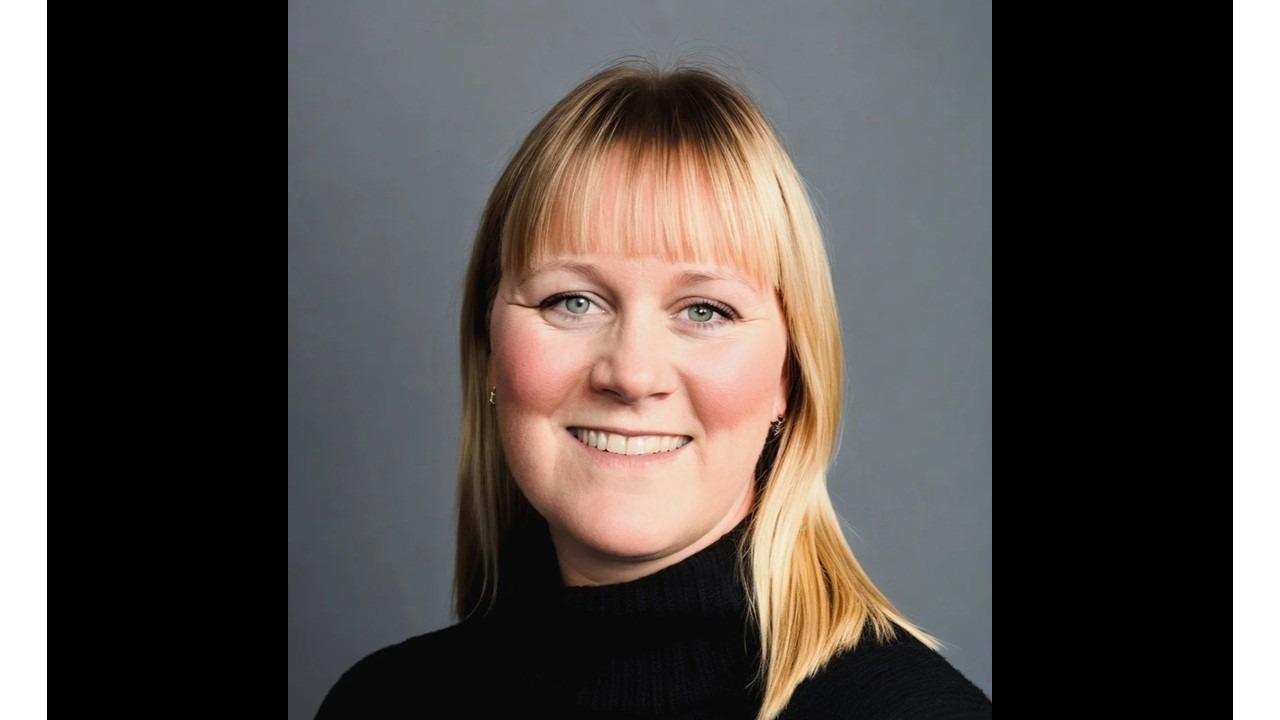
We were delighted to chat to Erla Gunnhildardóttir, who has built a hugely impressive career as a CFO in the games industry, working with leading companies such as Supercell and CCP Games, best known for the smash hit Eve Online.
Erla Gunnhildardóttir
Erla has spent 15+ years at the intersection of finance and gaming, working around the world with some of the industry’s most influential studios.
She spent seven years at CCP Games, leading FP&A for three global studios and helping guide the business through significant restructuring and its €425M sale to Pearl Abyss. She later joined Supercell in Helsinki as FP&A Lead, helping scale the financial infrastructure of a €2.8B global business.
Today, Erla is the Founder of Figures, working as a Fractional CFO and Board Member. She combines board-level governance (Harvard Business School’s Corporate Director Program) with executive coaching, bringing financial rigor that serves the people behind the numbers.
First is the human aspect of numbers. Since I was a child, math and the logic of money have been a real driver for me, but as I’ve lived and worked across different countries like Argentina and Finland, I’ve developed a deep fascination with culture and human behavior. I’m inspired by that intersection where the 'left brain' meets the 'right brain‘, using my natural comfort with numbers to help understand the human side of a business.
Second is the 'Strategy of the Game'. I’m a huge fan of strategy board games, and that love for dissecting a complex system has influenced my career. I’m inspired by the challenge of finding the 'highest impact move', viewing a business challenge as a puzzle that, when solved strategically, creates the most value for the team and the people involved.
Finally, a mindset of Limitless Agency. Growing up in Iceland with such strong female role models, I was raised with the belief that I can do anything I put my mind to. That sense of possibility has been my engine; it has inspired me to take on international roles and complex projects without letting perceived barriers or imbalances hinder my progress.
Ultimately, I‘m inspired by the idea that when you combine logic, strategy, and a belief in people, growth is inevitable.
When I started working in finance, finance was often viewed as the “scorekeeper”, the department you visited to get travel expenses approved or to check if you were over budget last month. It was also pretty unusual to be a woman working in the games industry.
To have more influence you have to build trust. It starts with deep listening. Before I ever open a spreadsheet, I try to understand the specific perspective that a line manager is coming from. What are their pain points? What are their creative goals?
From there, it’s about translation. You have to frame financial terms in their own language so that you are truly speaking the same language. If I talk purely in accounting terms, it creates a barrier. But if I can explain how a budget decision impacts their ability to hire or improve player experience, we connect.
Consistency is also key. You have to meet regularly and work as a true partner, not just someone who shows up at the end of the quarter or when there is a problem. I view Finance fundamentally as a service function based on Servant Leadership. My job isn't to control the business; it is to serve the teams and help the business thrive.
In traditional sectors, you often have a predictable product to sell. In gaming, we are “manufacturing entertainment”, which is inherently volatile. The biggest difference is that you cannot strictly “budget” your way to a hit game. In fact, an obsession with tight budgets can often strangle the creativity needed to produce one.
My experience has shown me there isn't one single way to manage this.
Regardless of the studio structure, the core difference in this industry is that Finance cannot be a police officer; it has to be an enabler. We provide the safety net and the runway so that creative teams have the time and space to find the 'fun' without worrying that the lights will go out next month.
Now, Finance is a strategic growth engine. We’ve moved from backward-looking accounting to forward-looking Financial Planning & Analysis (FP&A). The tools have changed, moving from static Excel sheets to dynamic platforms like Pigment and Tableau, but the mindset shift is more important.
The data in finance has also changed, previously it used to be more or less accounting numbers, but now a days we use operational KPI’s to model out scenario planning and operational insights and translate them to financials. So essentially, a good finance team works quite closely with the data and analytics team as well.
You have to accept that you cannot predict a hit. If we could, we’d all be billionaires. Instead of trying to predict the unpredictable, I focus on Scenario Planning and Agility.
I always advise studios to move away from static annual budgets toward monthly rolling forecasts. You need a “Base Case” (keep the lights on), a “Bear Case” (survival mode), and a “Bull Case'” (what happens if we go viral?).
There are different levels of financial forecasting for a gaming studios. Relatively it’s easy and standard practice to forecast any corporate costs. What is always hard to forecast is the revenues and marketing costs associated or other associated costs. In that case you use the scenario planning from a revenue perspective and iterate often.
It depends entirely on the business model and the stage of the company.
For early-stage studios, Cash Runway is the only metric that matters. If you run out of cash, the game over screen appears.
For Live Service (F2P) games we obsess over Retention (D1, D7, D30) and Monetization metrics like LTV (Lifetime Value) vs. CAC (Customer Acquisition Cost). You need to know if the unit economics work before you scale marketing.
However, if you are a Premium PC/Console developer, you’re looking at Wishlist velocity, pre-orders, and “attach rates” for DLCs.
And now, as a Board Member, I also look at Team Health metrics. Burnout is a financial risk, even if it doesn't show up immediately on the balance sheet.
The modern CFO is a strategic business partner, driving growth, innovation and digital transformation by using financial data to guide major decisions, manage risk, and influence overall company direction, acting as a vital link between finance and operations.
Ultimately the modern CFO needs to be the "Chief Storyteller“ to drive change.
Data without context is just noise. The real value lies in explaining the drivers - the “why” - behind the numbers.
There is real power in being able to shift perspectives by using data and storytelling.
First, play the games. You don't have to be a pro, but you need to understand the product and the player psychology to model the revenue effectively.
Second, master the tools. Excel is table stakes. Learn SQL, Tableau, or modern planning tools like Pigment. The industry is drowning in data, and the people who can visualize and interpret that data are in high demand.
Finally, learn to communicate. The best finance people I know are those who can sit in a room with a Creative Director and a Board Member and speak both languages fluently. Be curious, be humble, and be ready to adapt.
To find out more about Erla and her work as a Fractional CFO, Board Member and Executive Coach, please visit her website.
Neon River is a headhunting firm specialising in senior leadership roles for games companies around the world.